 ExplainersSponsoredExplainersSponsored
 Home Signal explainer desk15 September 2026
Your electricity bill gives you one number for the whole house. It never tells you which things. So most people guess, and they guess wrong.
The public accounts below come from people who stopped guessing and put a meter on their appliances. In almost every case, the thing costing money was not the thing they suspected.
First, what standby power is and how a meter measures it, in plain language. Then six real findings. Then a calculator, so you can price your own things before you buy anything.
Your electricity bill gives you one number for the whole house. It never tells you which things. So most people guess, and they guess wrong.
The public accounts below come from people who stopped guessing and put a meter on their appliances. In almost every case, the thing costing money was not the thing they suspected.
First, what standby power is and how a meter measures it, in plain language. Then six real findings. Then a calculator, so you can price your own things before you buy anything.
Your electricity bill gives you one number for the whole house. It never tells you which things. So most people guess, and they guess wrong.
The public accounts below come from people who stopped guessing and put a meter on their appliances. In almost every case, the thing costing money was not the thing they suspected.
First, what standby power is and how a meter measures it, in plain language. Then six real findings. Then a calculator, so you can price your own things before you buy anything.
Standby power, also called a phantom load, is the electricity a device draws while it looks switched off but is still plugged in, and energy agencies put it at 5 to 10 percent of household electricity.
Watts are how hard a device is working at this moment. Kilowatt-hours are how long it kept working that hard. A 1,000-watt kettle running for one hour uses 1 kilowatt-hour, and that unit is what your supplier charges for.
Small numbers add up because standby never stops. A media wall drawing 26 watts while "off" runs all 8,760 hours of the year. That is about 228 kilowatt-hours, or roughly 66 euros at an average EU price, for a wall nobody is watching.
A plug-in meter sits between the socket and the appliance. Many times a second it measures the voltage and the current, multiplies them to get watts, and adds the result up over time. After a day you know what that thing really uses. After a week you know what it costs.
None of the people in these cases used Shelly products or were paid for their accounts. Each one is quoted from a public post, and every source is linked in full.
He had inherited two tall upright freezers. Old, but they worked, so they stayed.
He put metering smart plugs on them for several months. Each was costing almost 250 pounds a year at 27p a unit. One of them only reached minus 10 degrees, well short of the minus 20 a freezer should hold.
He replaced one with a four-year-old A+ model bought second-hand. It runs for less than 80 pounds a year.
“Each was costing almost £250 a year to run. It was a big shock.”
Their circuits kept tripping and the obvious suspect was the freezer, so a replacement was on the cards. First they put a metering plug on it. It averaged 21.4 watt-hours an hour, which is perfectly normal.
The real problem was outside: a halogen security light that the cats set off all night. It came down, a solar LED went up, and a faulty breaker was replaced. The freezer stayed.
“my ten quid [plug] has potentially saved me several hundred.”
Their supplier's online energy hub said a small fridge-freezer was a quarter of the whole bill, about 26 pounds a month. It put lighting at 24 pounds in a home that was empty half the week.
The replies were blunt. The hub estimates from surveys; it does not measure. Another member, with real data from a similar fridge-freezer, put theirs at 6.48 pounds a month. Everyone gave the same advice: buy a metering plug for about a tenner and find out.
“The [supplier's] Energy Hub is basically astrology.”
A forum member put a watt meter on a 15-year-old fridge and on its new replacement. The old one drew more power while cooling but ran less than half the time, about 420 kilowatt-hours a year.
The new one drew less but almost never stopped: about 920 kilowatt-hours a year. Other members questioned the setup, and it may be an unusual unit. That is exactly the point. Without a meter, nobody would have questioned it at all.
Two more, in brief
| Source | What happened | The number |
|---|---|---|
| MoneySavingExpert, “Dunstonh”, 2022 | Several metering plugs, standby features switched off and the worst appliances replaced. Daily use halved. | 18 → 9 kWh a day |
| MoneySavingExpert, same thread, 2022 | A microwave measured at over 20 watts on standby, just to keep its clock running. | 20+ W |
Nobody in these cases found the money in a phone charger. They found it in a freezer in a garage and a light nobody could see.
The most repeated energy tip there is.
That is well under a euro a year. The real money in these cases was freezers and a floodlight.
Energy labels suggest so.
One new fridge measured at 920 kilowatt-hours a year against 420 for the 15-year-old model it replaced.
Many apps show a breakdown by appliance.
One guessed 26 pounds a month for a small fridge-freezer. A similar one, measured, was 6.48.
The light is out, the screen is black.
A microwave clock at over 20 watts is around 50 euros a year. A media wall at 26 watts is around 66.
The default price is roughly the EU household average. Change it to your own tariff. The first box is the one a plug-in meter replaces: a guess becomes a measurement.
A plug-in meter sees only what plugs into it. Anything wired straight into the fuse box is invisible to it: an electric water heater, a hob, an oven, a heat pump. Those need a meter in the consumer unit, fitted by an electrician. If a product claims to see your whole house from one socket, be sceptical.
What a plug meter does see is where most standby lives: media walls, office equipment, kitchen appliances, and the freezer in the garage. In the cases above that was where the surprises were.
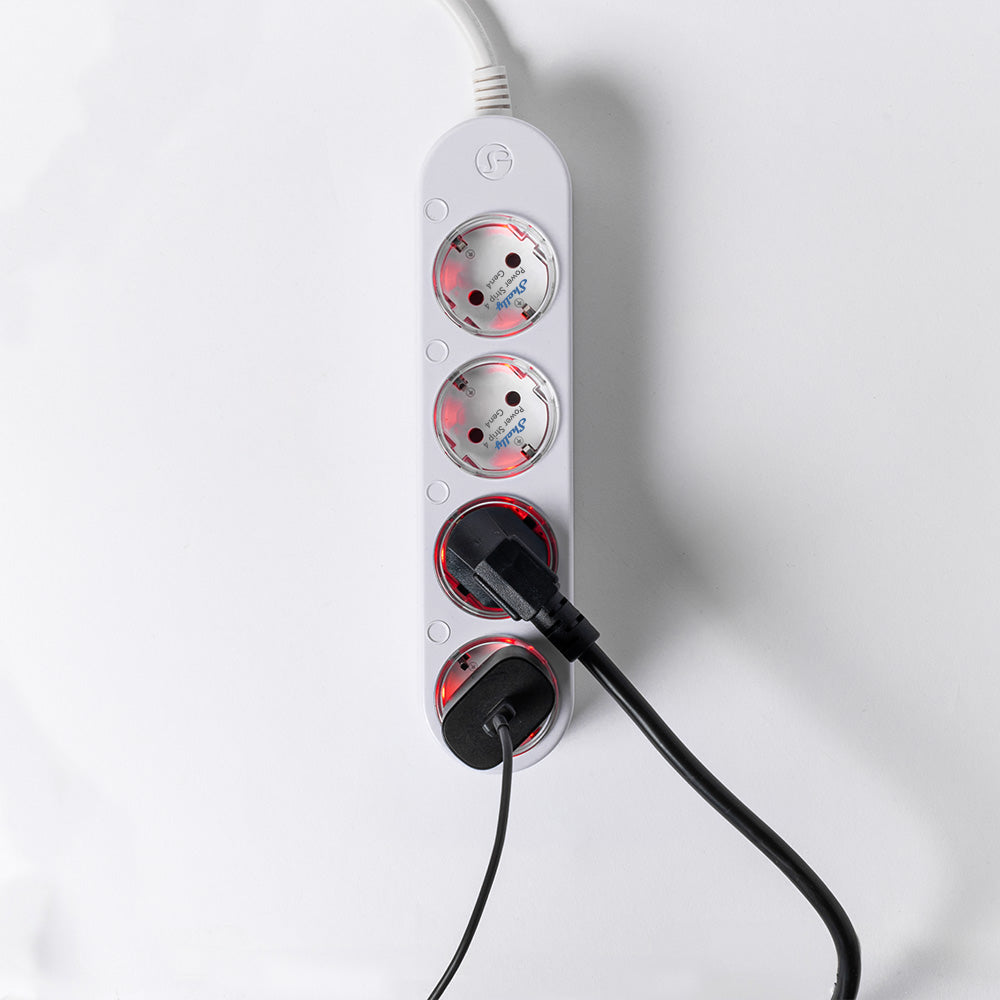
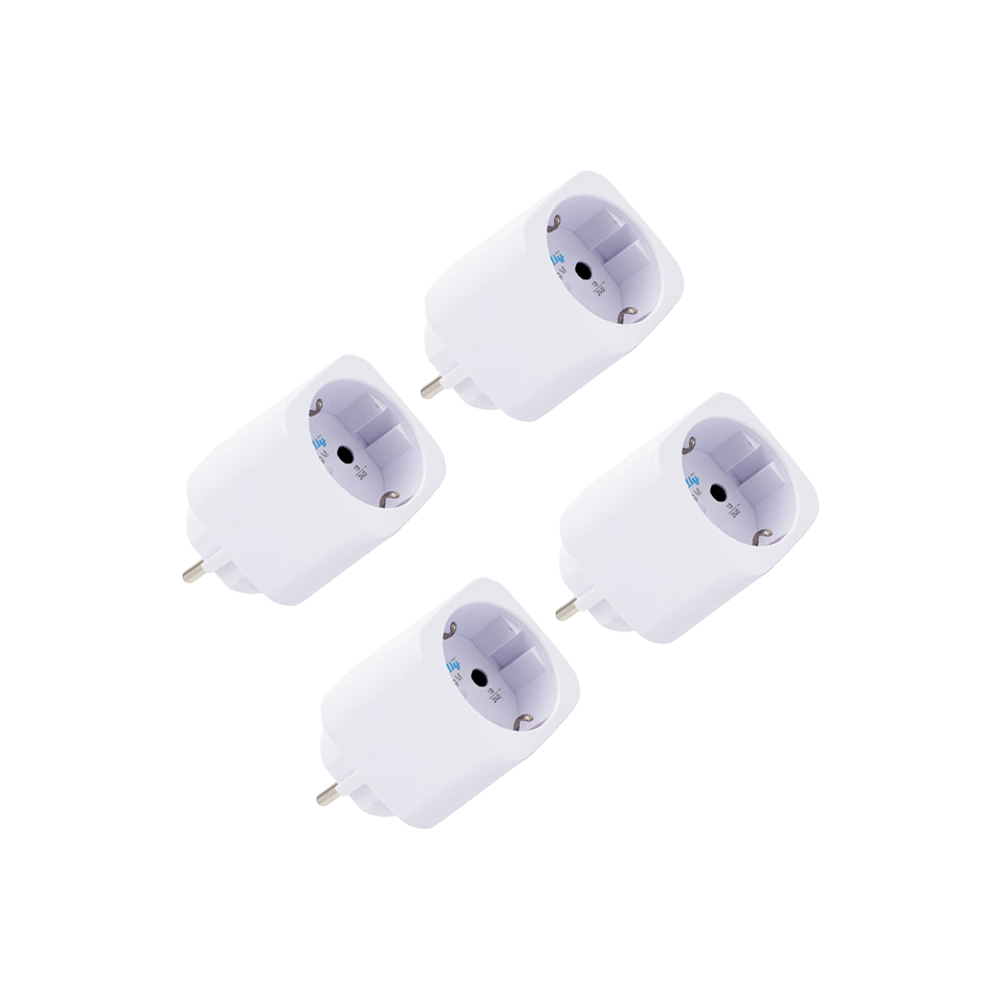
The kit below is one way to do it, from Shelly, the smart-home maker behind this sponsored explainer. A four-socket strip that meters and switches each socket separately, so a media wall can be cut off at midnight, and two single metering plugs for the appliances that stand on their own, like the freezer in the garage. Everything goes into ordinary sockets; nothing is wired.
If you want to act on this
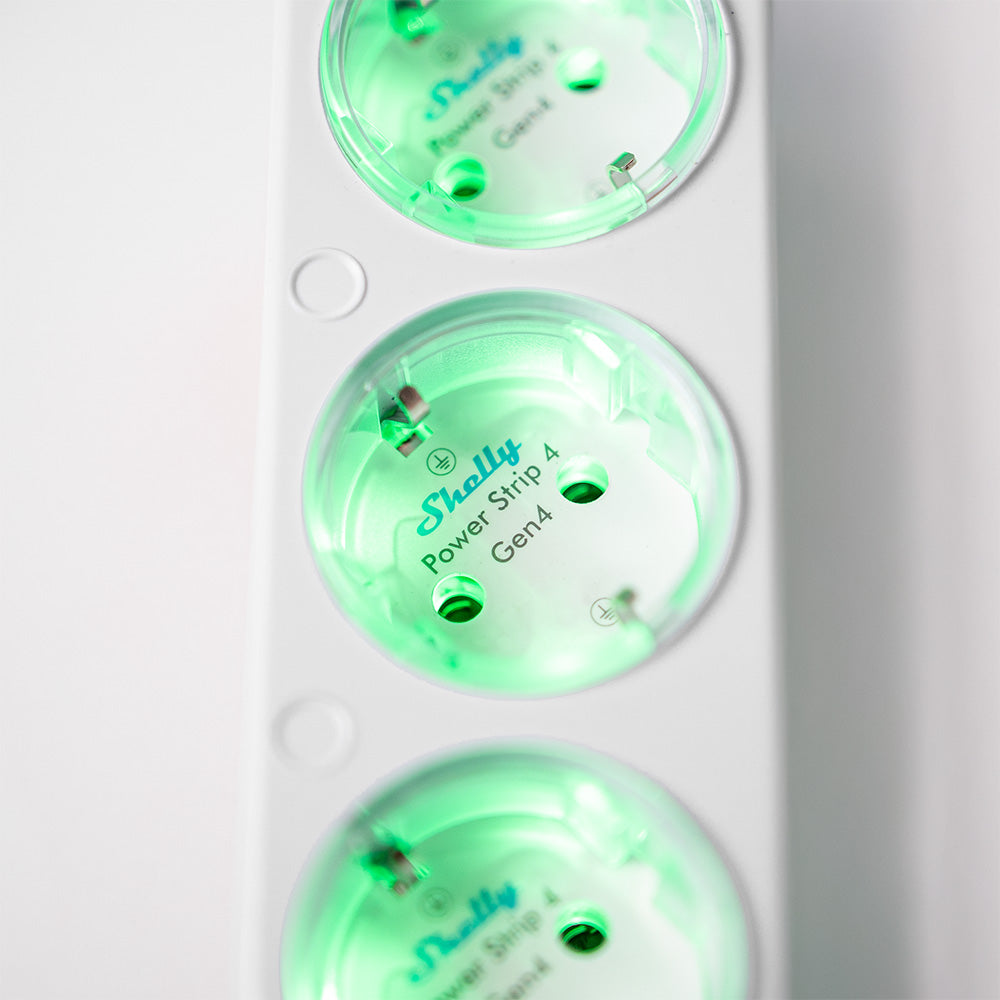
The Power Strip 4 meters four things at once and switches each one off on its own. The two Plug M go on the two appliances you are not sure about, like the freezer in the cellar or the dehumidifier. Together 74.90 EUR against 79.80 bought separately.
Plugs meter what plugs into them; a hardwired water heater, hob or oven is not visible to them.
"Finally got full control and power monitoring for all my appliances. Seamless Home Assistant integration with local control out of the box. Great dashboards, detailed energy flow data, useful automations, and precise metrics to make informed decisions."
"Great useful product for controlling, monitoring and customizing your appliances."
"excellent to track the consumption. the app is very intuitive!"
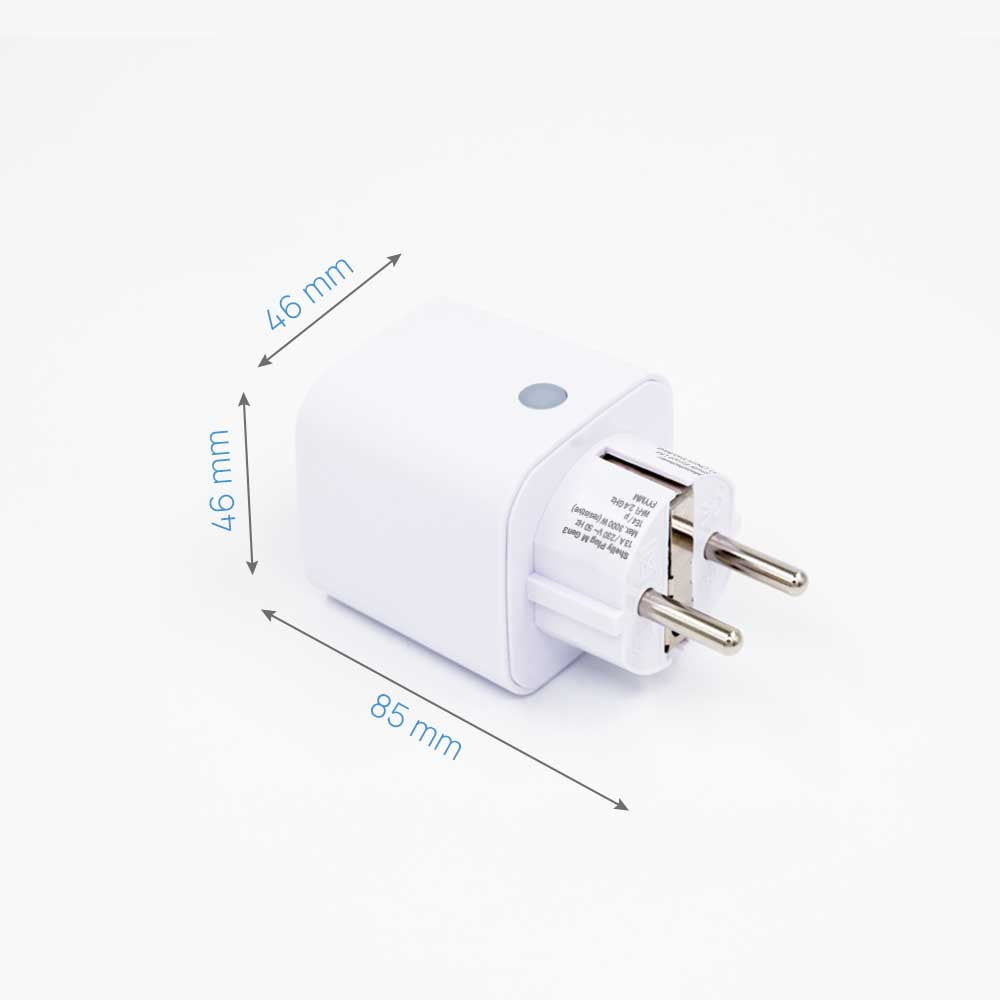
"Delivers as advertised. Unfortunately the indication light can't be turned off without turning off the device -1 star"
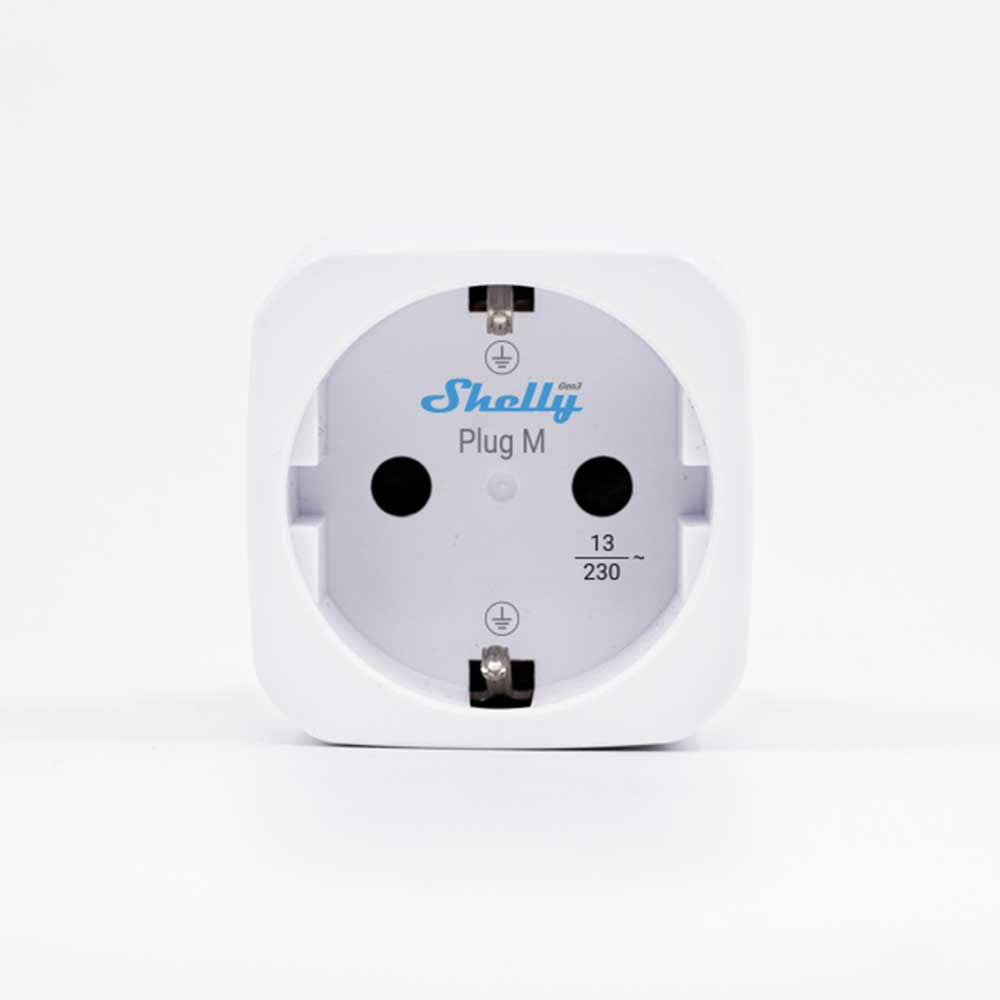
"Excellent pack. I'm using one peace for scheduling the irrigation pump at our cottage house, one as switch off timer for a steam iron and one for monitoring a breadmaker."
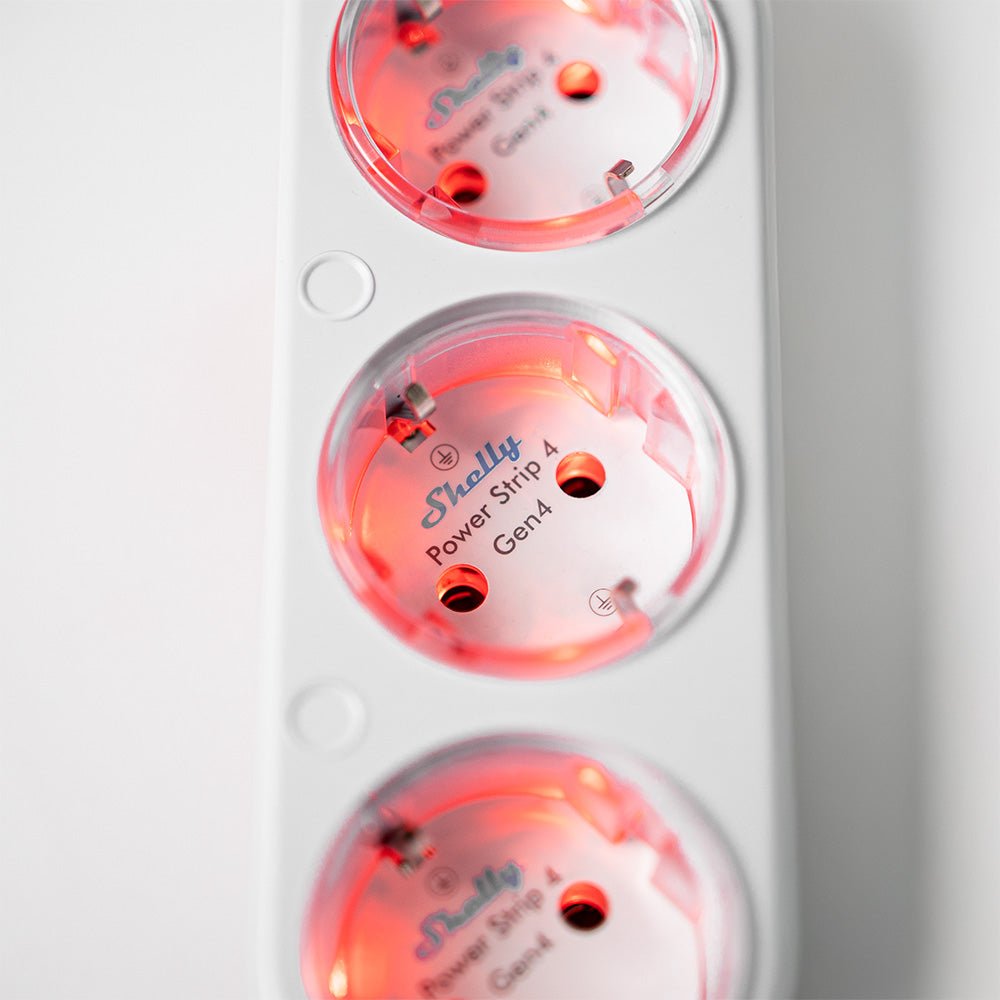
"Nice design, good features and easy configurability. Unknown if the switch knobs are moist resistant, unknown if the relays are dual pole ..."
Four stars and below are left in. The most common small complaint about the plugs is the status light, which cannot be switched off on its own. The most common one about the strip is a small reading on an outlet that is off, which is the strip's own electronics.