 ShellyShelly
Who this is for
There is a chest freezer in my utility room.
Last year I opened it four times. Twice at Christmas, once for a barbecue, once to find out what was still in it.
It cost me 148 euros. That is more than my washing machine, my television and every charger in this house put together.
And it was not broken. Nothing about it looked wrong. It was cold inside. It was simply running for eleven hours out of every twenty four, and had been for two years.
I only know that because I stopped guessing and measured. Here is what that cost, and what else it found.
Unplug your chargers. You have been told that one for fifteen years.
A charger left in the wall with nothing on it draws about a tenth of a watt. Every charger in my house, plugged in all year, comes to 87 cents.
Eighty seven cents. That is the advice.
Meanwhile the chest freezer in my utility room, which I open about four times a year, was taking 148 euros. Nobody has ever once suggested I look at it.
A little over a thousand euros a year. That is what an average European household pays for electricity.
Now name the thing that took the biggest share of it.
You cannot. Neither can the meter on your wall. It gives one running total and nothing else. That is everything your supplier needs to send you a bill, and it is useless to you.
Which costs you, because of something researchers keep finding. Households that can see their usage use five to seven percent less. Having changed nothing at all.
Every tip you have ever been given is about the cheapest things in your house. Nobody has ever once asked you to look at the expensive ones.
So there are two questions here, and the second one is the interesting one.
Not how much you are wasting. Why nobody has ever shown you where it goes.
Think about every piece of energy advice you have been given.
Every one of those is real advice. Not one of them is worth what you think.
Here is what each is actually worth over a whole year, in euros, at the average EU price.
Do all of it. Every day. Forever. You are fighting for under a hundred euros a year.
That is why none of it ever showed up on a bill you could feel.
This took me a while to accept, so here it is plainly.
What you pay for is hours switched on, not how much you use something.
A tumble dryer runs two hours, twice a week. A chest freezer runs eleven hours a day, every day, for fourteen years, whether or not anybody opens it.
So the appliances that cost you the most are usually the ones you think about the least. Here is what they cost over a year, at the same average EU price.
Worked at 0.29 EUR a unit. Towel rail: 300 W for twenty hours a day across a 150 day heating season. Dehumidifier: 300 W for eight hours a day. Freezer: measured in my own utility room. Set top box, console and router: their real standby draw, permanently. Your own figures will differ, which is exactly the point.
Look at the bottom line, then look at the top one.
The advice you have been given for fifteen years is aimed at the last line on that list. Nobody has ever mentioned the first three, because a list of tips cannot know what is in your house.
Every one of those is plugged in. Every one is out of sight. And not one has ever been measured, because there has never been anything in the socket to measure it.
The two I found in my own flat were the freezer at 148, and the wall behind the television at 86. 234 euros a year, from two things I had never once thought about.
So you have been asked to fight for scraps, forever, while the real money leaves through sockets nobody has ever asked you to look at.
That is why none of it stuck. It was never a discipline problem. You were dieting in the wrong room.
Nobody is stealing from you and there is no scandal here. There is something duller and more expensive. Every instrument in the chain was built to bill you, and not one of them was built to inform you.
The meter on your wall produces one running total. Exactly what a supplier needs to issue an invoice, and exactly useless for working out which appliance is responsible.
A smart meter does not change that. It reports the same total more often, to your supplier. It still cannot tell the water heater from the oven, because it was never designed to.
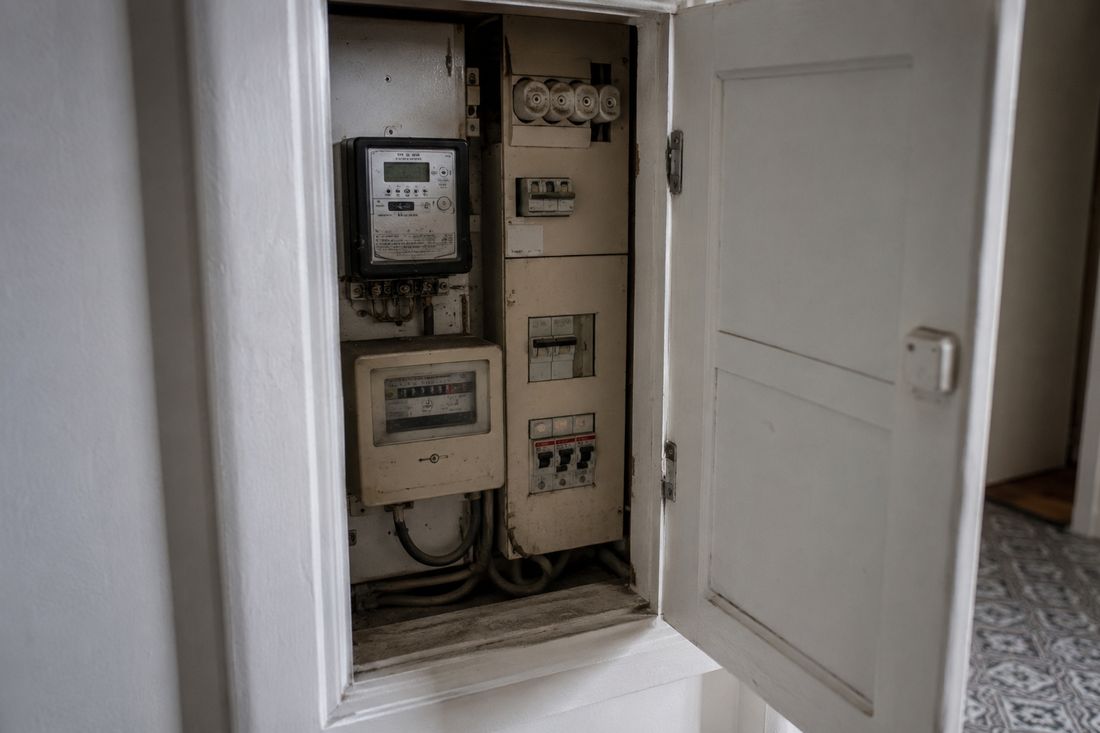
Most of us pay the same amount every month. The supplier guesses your year from last year, rounds it up a bit, takes that sum twelve times, and settles up at the end.
Read that as a feedback loop.
By then nobody alive could connect it to a cause.
And if you have overpaid, you usually get a credit against next year rather than your money back.
Their perfect customer is a direct debit nobody ever queries. A proper breakdown of your home would start arguments, phone calls and switching. It would also cost them money to build.
Meanwhile taxes and levies are about twenty nine percent of the final price. Roughly a third of what you waste is not even energy.
You are billed for one total you cannot break down, by people with no reason to help you break it down.
Once you see it that way, the answer stops being about willpower. It becomes almost boring.
You do not need to try harder. You need to measure in the right place. Not at the supplier's meter. At the sockets where the money is actually spent.
Office buildings have done this for decades. It never reached homes because the kit used to cost more than the problem.
And you do not need to get inside a consumer unit to do it. Every socket in your home is already a measuring point. Nobody has ever sold you one that reports.
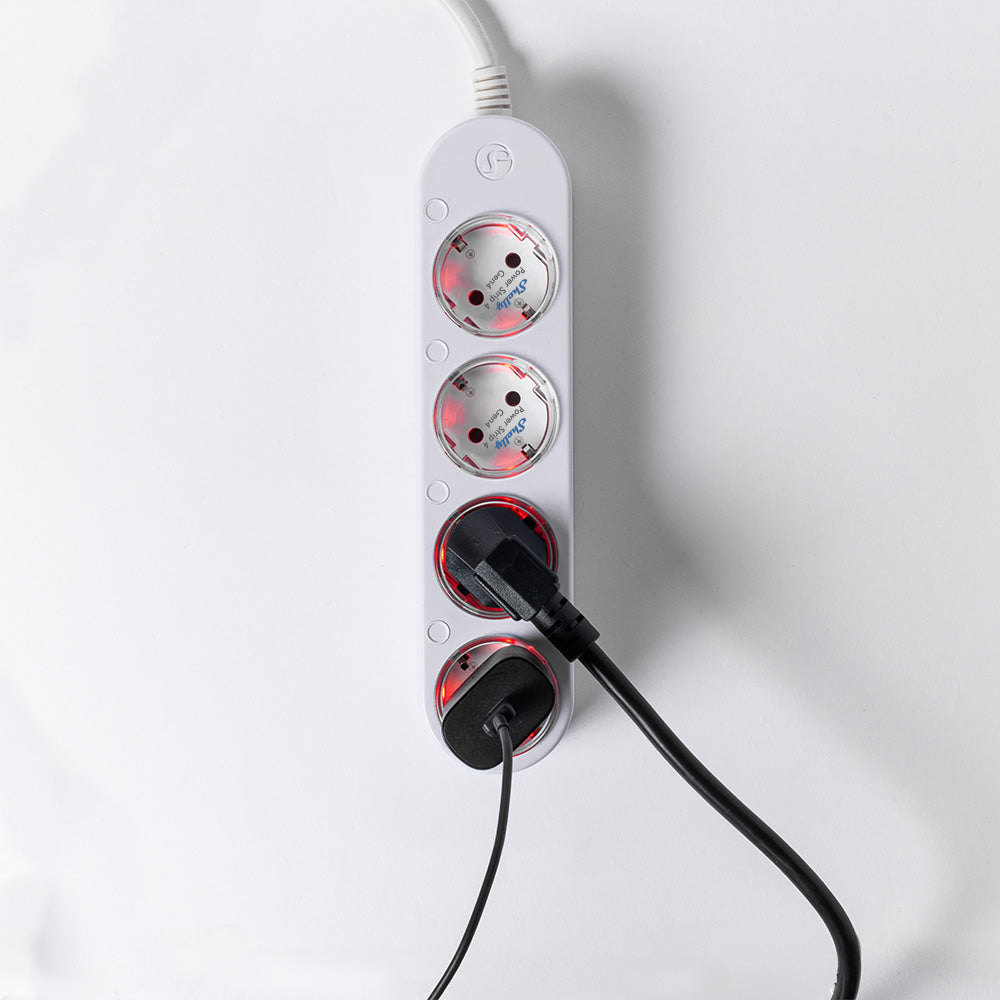
The set, the box, the console, the router, the soundbar. All on, all the time, all on one extension lead, and nobody has ever told them apart. Four sockets that each read and switch on their own is the fastest 34 watts you will ever find. Mine came to 86 euros a year with the television off.
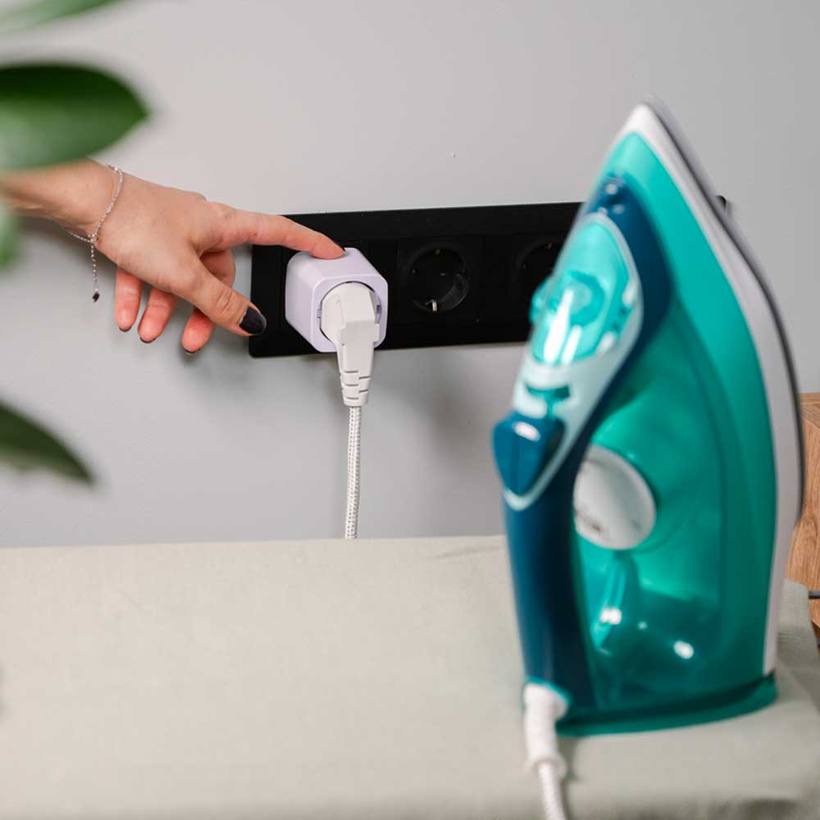
The freezer. The second fridge in the garage. The dryer, the dehumidifier, the fish tank. Each one is a single socket somewhere else in the house, which is what the two spare plugs are for. Mine was the freezer, at 148 a year. I had never once wondered.
Everybody has a suspect. Measure it first. Half the value here is finding out that the machine you have felt guilty about for two years costs six euros a month, and the real money is somewhere you never looked.
This does not go in your consumer unit, it does not need an electrician, and you can take it with you when you move.
Seventy square metres, two bedrooms, a utility room off the kitchen. February bill of 214 EUR and no idea why.
I nearly booked a 180 EUR audit. Then I asked what the report would say about my appliances. The answer was that it would guess them, from the ratings on their labels and how many people live here.
A label tells you what a machine draws when it is new and working properly. Mine was neither.
I spent the money on measuring instead. Six sockets, one evening. Three things came back that I did not expect.
The media wall drew 34 watts with the television off. Set, box, console, soundbar, router. All asleep, all drawing.
Over a year that is 298 units, or about 86 euros. Which lines up almost exactly with the 305 units a European home is reckoned to spend on standby.
Here is what no estimate could have given me: which of them it was. The console alone was 21 of the 34 watts. The router I left on, because I want it on.
You can only make that choice if you can see the sockets separately.
Not broken. Nothing about it looked wrong, it was cold inside, and it had never once been mentioned by anybody giving me energy advice. It sat in the utility room and it was fourteen years old.
On its own socket it drew a little over 1.4 kilowatt hours a day, which is 510 in a year and about 148 euros. A hundred and seventy times what unplugging every charger in the flat would ever have saved me.
But the number was not the finding. The shape of it was.
The motor was running eleven hours and twenty minutes out of every twenty four. A freezer that size should be nearer seven. It was not pulling more power. It was pulling it for far longer.
That is what a worn door seal looks like from the socket.
The seal cost twelve euros and took ten minutes. Run time dropped to seven hours ten. The socket has held it there ever since.
The tumble dryer, the machine I was braced to find guilty, cost about six euros a month. Seventy two euros a year.
Two years of quiet guilt about a machine that was never the problem. Meanwhile a freezer four metres away took twelve euros a month and nobody ever mentioned it.
That is the whole argument for measuring instead of guessing, and it took one evening and no electrician to settle.
What it did not find matters too, and I will come back to it. The water heater, the hob and the oven are wired in. They have no plug, so nothing here can see them.
Exactly as they run. One evening to set up, untouched since.
That is the difference between a machine doing it and you doing it. It is the only reason this stuck when four minute showers did not. None of it is a habit. Nobody has to remember anything.
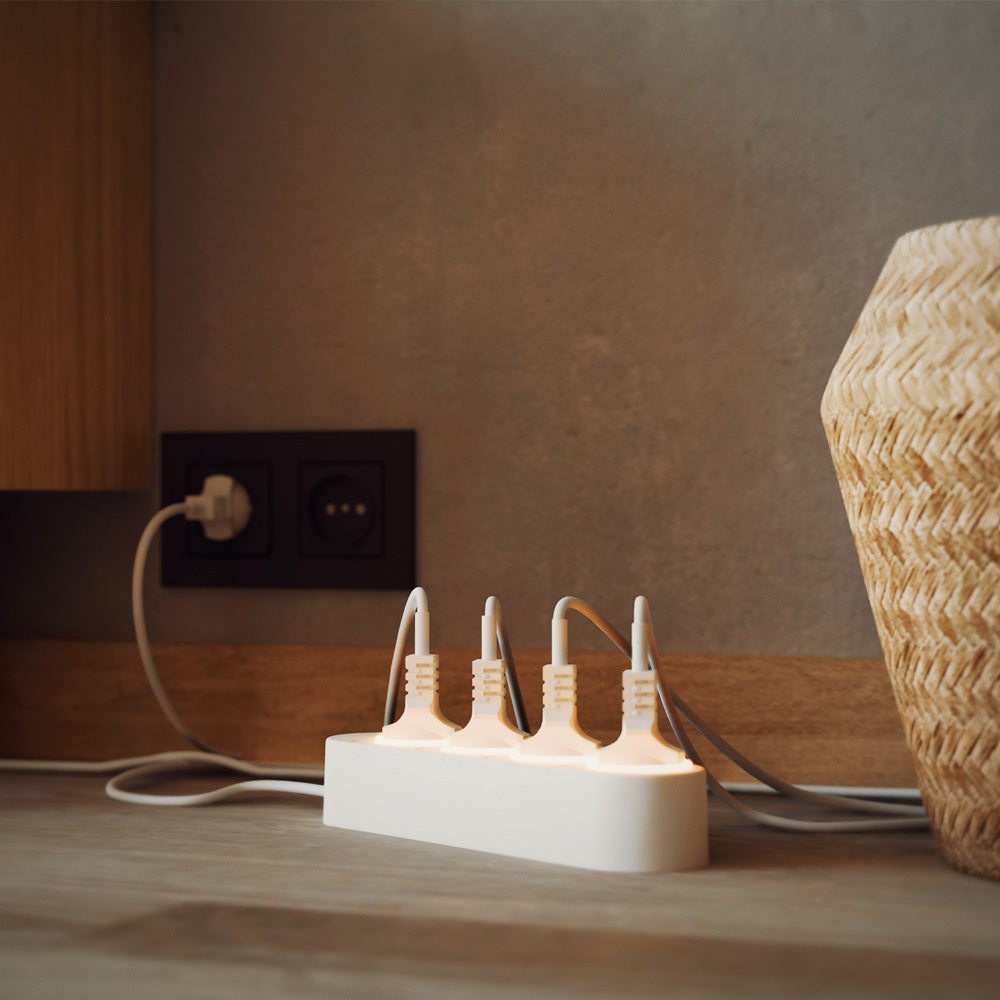
Both are made by Shelly. The strip replaces the extension lead behind your television. The two plugs go wherever the suspects are. That is the whole installation.
 Amazon Alexa
 Google Home
 Apple Home
 SmartThings
 Home Assistant
 Homebridge
 openHAB
 Domoticz
 MQTT
MQTTSpeaks Matter, Zigbee 3.0, Z-Wave, Bluetooth and Wi-Fi, so it also joins hubs and systems not listed here.
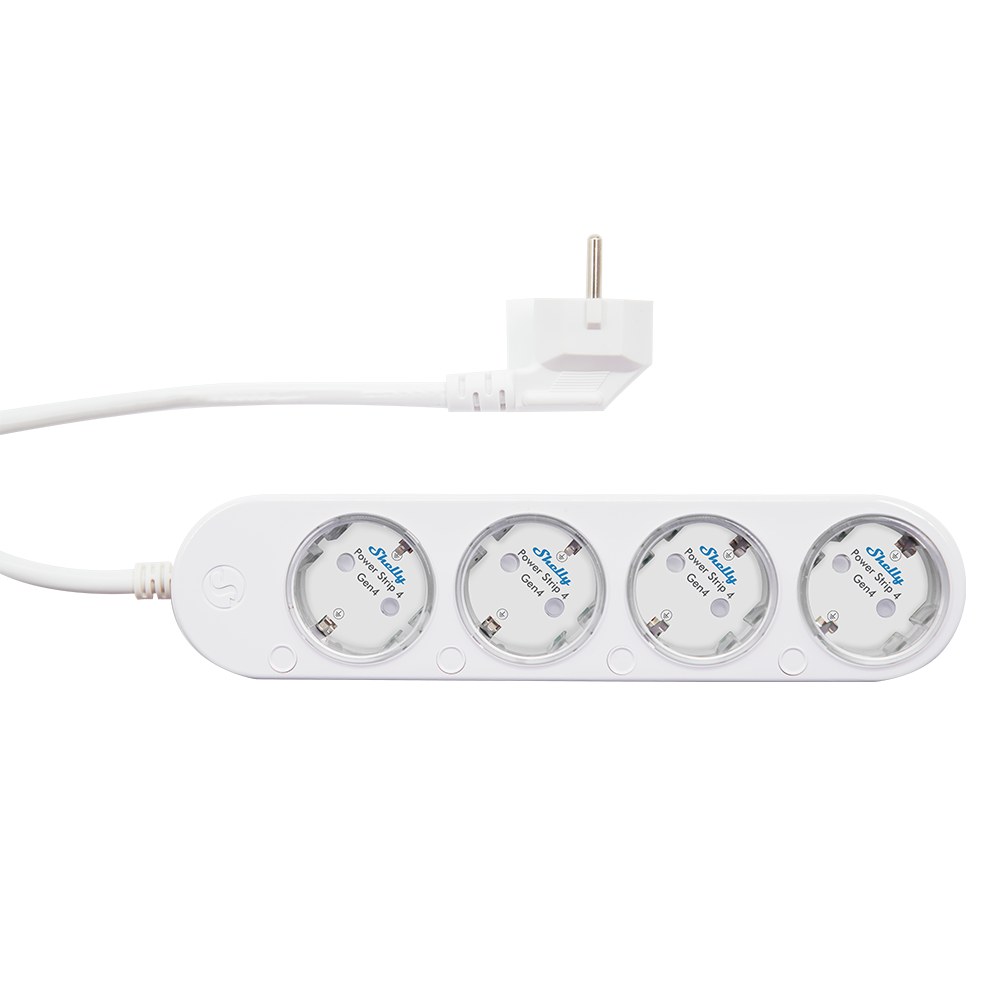
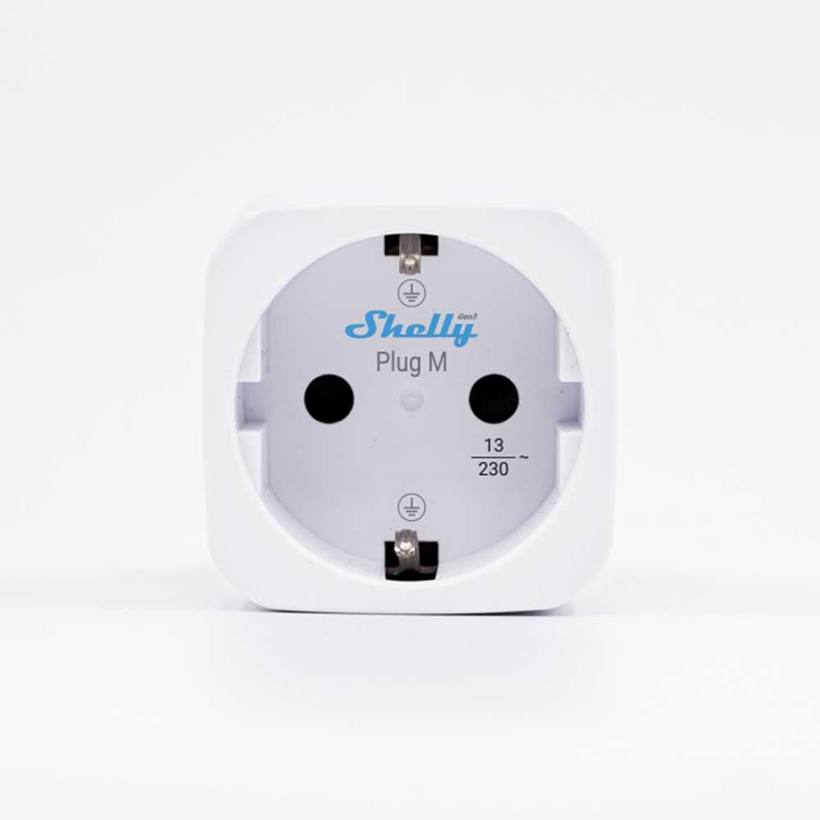
Nothing is wired in and none of it needs an electrician. That is also why it works in a rented flat. Everything joins your Wi-Fi directly, so there is no hub to buy and nothing extra to plug in.
Your water heater, hob, oven, storage heaters and ceiling lights are wired in. They have no plug. Nothing in this kit can see any of them. No clever software changes that.
Measuring those means an electrician and a meter inside your fuse box. Different product, different afternoon.
So it depends on how you heat. Heat with gas and almost your whole electricity bill is things with plugs, and this sees nearly all of it. Heat with electricity and this sees the appliance half, not the heating half.
Either way it finds the freezer. In my experience the freezer is the one nobody has ever looked at.
I did not halve my bill. Nobody does, and anybody who says otherwise is about to sell you something.
Two things changed, and I can put an exact number on both. Both are a socket reading, not a guess against last winter.
That is 112 euros a year against 69 spent once. The kit had paid for itself before the summer.
It is also about eleven percent of an average bill, roughly twice what the studies get from watching alone. That is the difference between seeing a number and being able to do something about it.
What I will not do is add the five to seven percent from watching on top. Some of that is the standby I have already counted. Adding both would count the same euros twice.
And I will not pretend your house is mine. You may not own a freezer. You may own two, plus a dehumidifier and a fish tank. The only honest thing anybody can tell you about your electricity is that right now you cannot name where it goes.
What does not depend on anything: I know where my electricity goes. When the bill moves I know why within ten minutes.
What it is costing you
What we are offering
Bought separately the strip and the two plugs come to 79.80 EUR. As an introductory kit for readers of this page they are 69 EUR, with free delivery.
Free delivery. Ships from Shelly's own store, with fourteen days to return it.
Standby alone takes about 88 EUR a year off an average European home. This is 69 EUR, once. And standby is the part you already knew about.
Free delivery. Ships from Shelly's own store, with fourteen days to return it.
Nothing is wired in. Nothing goes near a fuse box. All of it moves house with you. 69 EUR against 79.80 bought separately, delivery free.
Free delivery. Ships from Shelly's own store, with fourteen days to return it.
"Great useful product for controlling, monitoring and customizing your appliances."
"Working well, shows all power net information U, f, I, P, E."
"Great product with a lot of functions. BTHome works great."
"The product is working very well. It has a good integration with Home Assistant. I like the opportunity to deactivate the functions that I don't need."
"Very good and works fine with Fritz Gateway."
"Nice design, good features and easy configurability."
Four stars and below are left in. The most common complaint on this hardware is the app on your first device, not the hardware itself.
See Availability And Price